
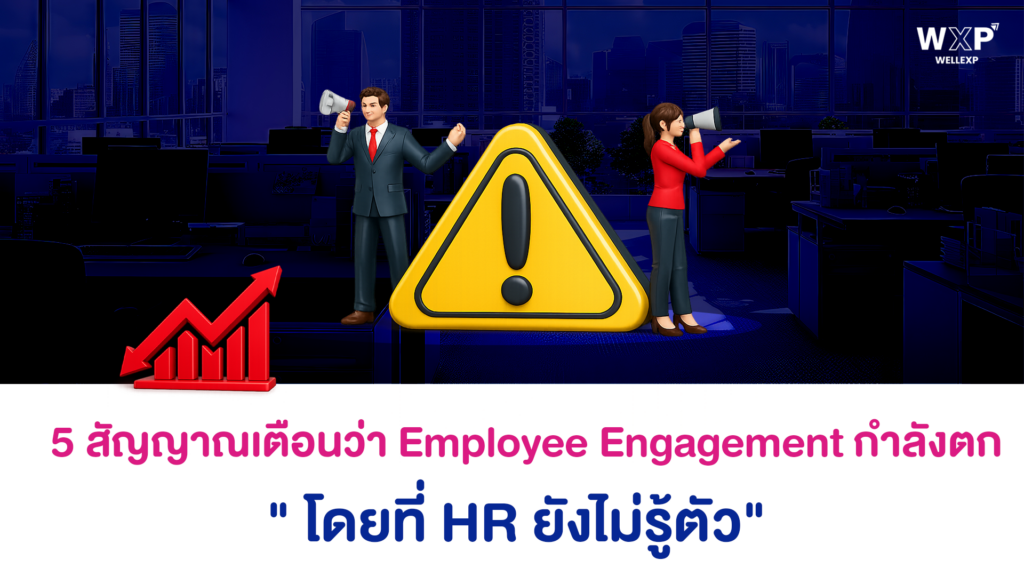
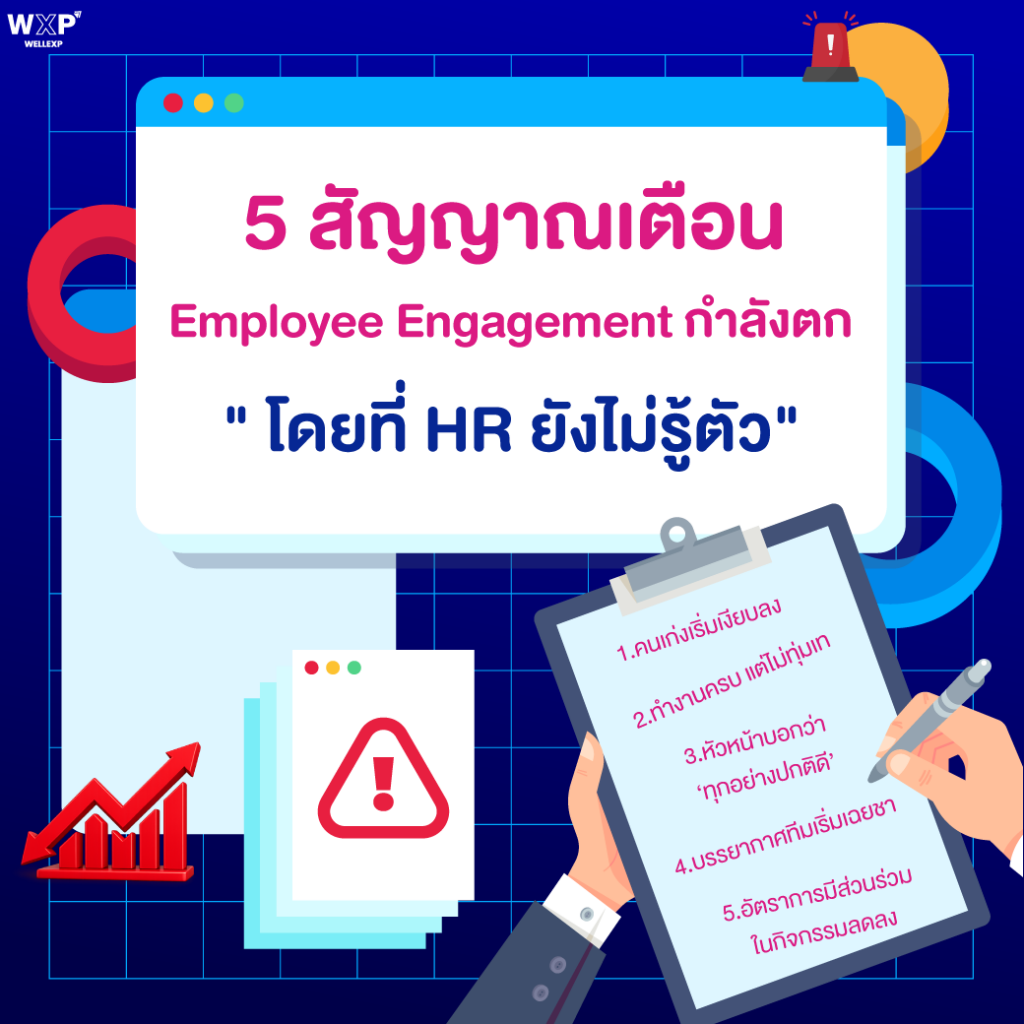
5 Warning Signs Your Employee Engagement Is Declining Without HR Noticing
In recent years, Employee Engagement has become one of the key indicators for modern organizations, as companies with highly engaged employees tend to achieve better productivity, retention, and overall performance.
According to the Gallup Workplace Report, organizations with high employee engagement achieve significantly better business outcomes, such as:
18% higher productivity
23% higher profitability
Significantly lower turnover
However, the challenge is that employee engagement does not decline in an obvious way overnight.
Many organizations only realize the problem when:
Top performers start leaving
Teams become noticeably quieter
New ideas begin to disappear
In reality, employee engagement often sends early warning signals.
And here are five key signs that HR should not ignore.
1. Employees Become Quieter in Communication
One of the earliest signs of declining employee engagement is when employees start participating less in communication.
For example:
They rarely share opinions in meetings
They stop proposing new ideas
They do not respond to internal surveys
They participate less in discussions
This phenomenon is often referred to as
Employee Silence
It usually occurs when employees feel that:
"Their opinions do not make a difference in the organization."
When employees begin to withdraw from communication
employee engagement is often already declining.
2. Declining Participation in Organizational Activities
Another sign that HR often overlooks is a
decline in participation in organizational activities.
For example:
Lower attendance at town halls
Fewer responses to internal campaigns
Low participation in wellness programs
Engagement activities becoming quieter
Many organizations assume employees are simply busy.
However, in reality
in organizations with high engagement, employees naturally want to participate in company activities.
Therefore, if the participation rate continues to decline
it may be a sign that employee engagement is dropping.
3. Performance Remains Stable,
but the Passion Is Gone
Declining employee engagement does not necessarily mean that performance will drop immediately.
Many employees may still meet their KPIs.
However, what begins to disappear are:
Enthusiasm
Creativity
New ideas
The motivation to help improve the organization
Common behaviors often include:
Doing only what is required in their role
Not volunteering for new projects
Not suggesting improvements
This is often referred to as
"Quiet Disengagement."
Employees are still with the organization, but they are no longer truly engaged.
4. Declining Employee Feedback
Organizations with high employee engagement typically have employees who:
Feel comfortable speaking up
Share their opinions openly
Provide feedback willingly
However, when engagement begins to decline
employees may start to:
Ignore surveys
Stop sharing their opinions
Refrain from giving feedback
Many HR teams encounter a situation where the
response rate of engagement surveys becomes very low.
This may indicate that
employees no longer feel that their voices truly matter.
5. HR Only Discovers the Problem During the Exit Interview
The most concerning sign is when an organization only realizes there is an engagement
problem after employees have already decided to leave.
For example:
High-performing employees resign unexpectedly
Exit interviews reveal feedback that HR has never heard before
Managers only realize then that their teams have been disengaged
This often reflects that the organization lacks a system to detect engagement issues early.
Why Many HR Teams Fail to Notice These Signs
One key reason is that many organizations still measure employee engagement only once a year
through an Annual Engagement Survey.
As a result:
Feedback arrives too late
Problems have already developed
HR has little time to respond or take action
In reality, employee engagement should be monitored in a more continuous way
ideally through real-time or ongoing tracking.
How Modern Organizations Measure Employee Engagement
Many organizations are now adopting newer tools such as:
Pulse Survey
Quiz / Vote
Quick Poll
Engagement Dashboard
Real-time Feedback
These tools help HR to:
Identify warning signs earlier
Gain deeper insights into employees
Address issues before employees decide to leave.
Conclusion
Declining employee engagement often comes with clear warning signs, such as:
Employees becoming quieter
Reduced participation in organizational activities
A loss of passion at work
Decreasing employee feedback
HR discovering the problem only during exit interviews
The important question is:
Is your organization already seeing these signs?
Many organizations are beginning to adopt tools such as Pulse Surveys and Engagement Dashboards to help HR identify employee engagement signals more quickly.
Platforms like WellExp help HR teams to:
Create surveys, quizzes, and votes instantly
Collect employee feedback in real time
View reports and insights easily
This enables HR to better understand employees before problems become too late to address.
FAQ
What is Employee Engagement? Employee Engagement refers to the level of employees’ emotional commitment and connection to their organization, their work, and their team. It directly impacts an organization’s productivity, retention, and overall performance.
Wellexp
Why is Employee Engagement important? Organizations with high employee engagement tend to have higher productivity, lower turnover, and greater employee job satisfaction.
Wellexp
How should HR measure Employee Engagement? HR can measure employee engagement using tools such as Pulse Surveys, Engagement Surveys, Feedback Platforms, and HR Analytics Dashboards.
Wellexp
#HRTrends2026 #EmployeeEngagement #WellExp #บริหารคน #HRยามเช้า #รักษามือดี #WorkLifeHarmony #FutureOfWork