Employee Engagement declines 📉
will be like...
Organizations are competing on something deeper and far more sustainable: Employee Engagement.
・Massive hidden costs from employee turnover
・Lower productivity and declining performance
・Gradual loss of competitive advantage
If your organization is experiencing more than three of the following signs, it may be time to urgently revisit your engagement strategy.
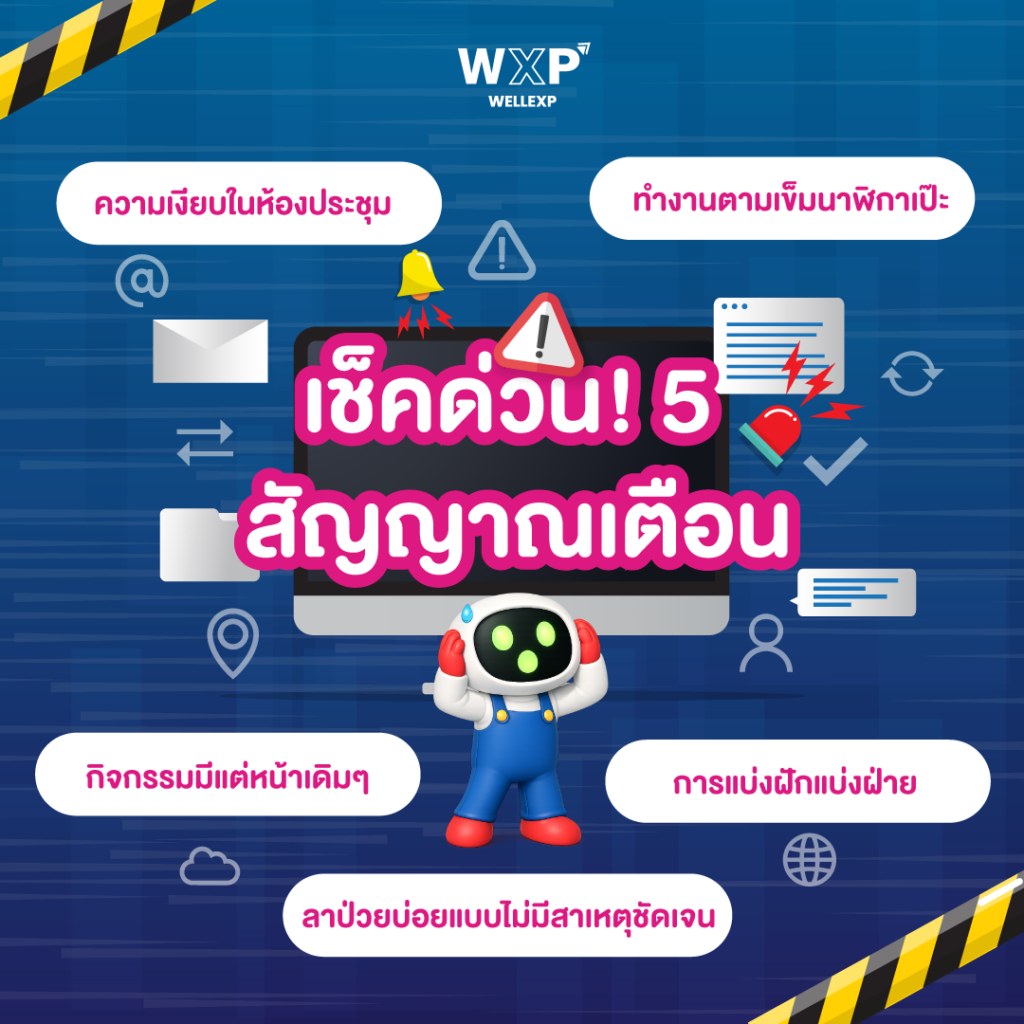
1. The Silent Meetings 🤫
One of the clearest signs of declining engagement is when employees simply stop speaking up.
Meetings that were once filled with ideas and discussions become quiet sessions that end with, “No questions.”
This may not mean everyone agrees. It may signal a lack of psychological safety — employees no longer feel safe sharing opinions.
🚨 Risk Indicators:
・Organizational stagnation and lack of innovation
・Problems left unspoken until they become serious issues
・A conventional “just do the job” mindset without adapting to change
2. Strict “9-to-5” Mentality 🫥
Work-life balance is important. However, when employees start doing only the bare minimum required — also known as quiet quitting — it becomes concerning.
They stop volunteering ideas, avoid supporting other teams, and no longer feel ownership of their work.
🚨 Risk Indicators:
・Noticeable decrease in project velocity
・Low discretionary effort (doing 100, never 101)
・Lack of ownership — “company work,” not “our work”
3. Declining Participation in Company Activities 📉
Town halls, workshops, or internal events receive noticeably lower participation. Employees attend only because they “have to.”
This signals that activities are no longer creating real engagement — and company culture may be losing its appeal.
🚨 Risk Indicators:
・Weak cross-functional collaboration
・Silo mentality — teams working separately without shared goals
・Declining employee Net Promoter Score (eNPS)
4. Hidden Absenteeism 😷
HR may notice increased sick leaves, especially on Mondays or Fridays, or frequent late arrivals without clear reasons.
Often (or Sometimes), these are not physical health issues — but signs of mental health struggles, burnout, or emotional disengagement.
🚨 Risk Indicators:
・Burnout syndrome
・Monday blues and early Friday exits
・Demotivation and loss of drive
5. The “Us vs. Them” Mentality 🗣️
Pay attention when employees start referring to the company as “they” instead of “we.”
For example:
“Management wants it this way” instead of “We decided this way.” This subtle language shift reflects emotional distance.
Employees may begin seeing themselves as just workers — not contributors to shared success.
🚨 Risk Indicators:
・Lack of unity
・Cultural fragmentation
・Increased retention risk
At this point, how many of these signs can you recognize in your organization?
 Quick Tip for Leaders:
Conduct regular 1-on-1 check-ins to understand how your team truly feels — before these warning signs escalate into a crisis.
Use surveys, rating tools, and open-ended feedback to measure employee sentiment in real time. Platforms like WellExp allow employees to respond easily via mobile, while HR gains immediate insights to proactively strengthen engagement.
Improving Employee Engagement is not about adding lunch buffets or organizing trips.
It requires a strategic management approach:
⭐ Clear management strategy
⭐ Active listening
⭐ Meaningful recognition
⭐ Clear communication of purpose
Engagement can be improved starting today.
If you are reading this article, it means you care about strengthening engagement in your organization.
Don’t wait until your top performers walk in with a resignation letter. Start taking action now.